













Myrtle Beach Beach Hazards Statement Issued for Coastal Horry and Georgetown Counties
June 27, 2026
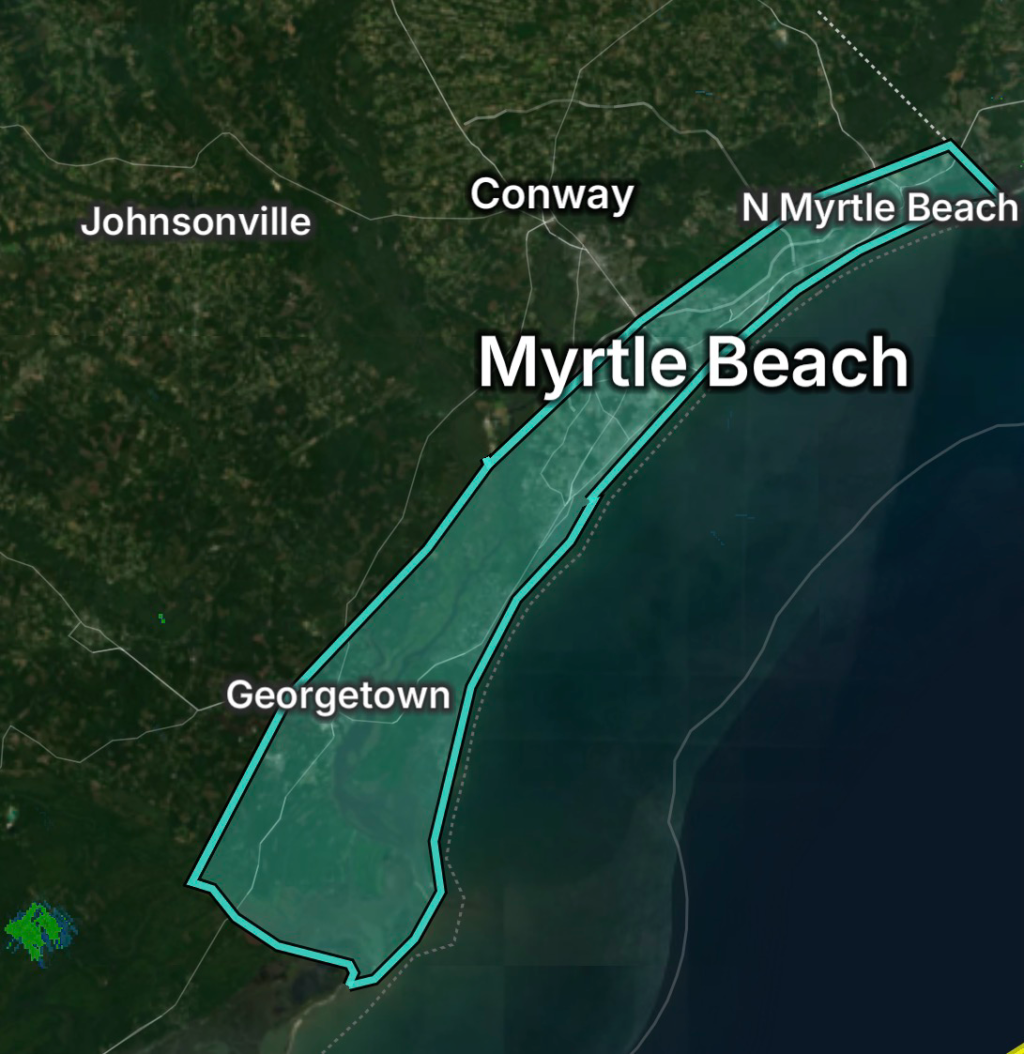
Visitors and residents planning a day at the beach along South Carolina’s Grand Strand should be aware of hazardous surf conditions. The National Weather Service has issued a Beach Hazards Statement for Coastal Horry and Coastal Georgetown Counties, remaining in effect until 8:00 PM EDT Saturday. (National Weather Service)
What Is the Hazard?
Forecasters are warning of:
- Strong south-to-north longshore currents
- Moderate risk of rip currents
Longshore currents travel parallel to the shoreline and can unexpectedly carry swimmers down the beach. These currents may also push swimmers toward piers, jetties, and other dangerous structures, where rip currents are often stronger. (National Weather Service)
Areas Affected
The Beach Hazards Statement includes:
- Myrtle Beach
- North Myrtle Beach
- Surfside Beach
- Garden City Beach
- Murrells Inlet
- Litchfield Beach
- Pawleys Island
- Other beaches across Coastal Horry and Coastal Georgetown Counties
Beach Safety Tips
If you’re heading to the coast today:
- Swim only at beaches protected by lifeguards.
- Check beach warning flags before entering the water.
- Stay away from piers, jetties, and inlets where currents are often strongest.
- Never swim alone.
- Keep children within arm’s reach near the water.
If caught in a rip current:
- Stay calm.
- Do not swim directly back toward shore against the current.
- Swim parallel to the shoreline until you escape the current.
- Then angle back toward the beach.
- If unable to escape, float or tread water and wave for help.
Why These Conditions Matter
Rip currents remain one of the leading weather-related hazards along the Carolinas, responsible for the majority of surf rescues and numerous fatalities over the years. Even on sunny days, ocean conditions can become dangerous with little warning. (National Weather Service)
Stay Weather Aware
Anyone visiting the beaches of Myrtle Beach and surrounding communities should continue monitoring local forecasts and heed instructions from lifeguards and local officials throughout the day. Ocean conditions can change quickly, and remaining informed is the best way to enjoy the coast safely.