










Two Earthquakes Strike Japan as Tropical Storm Mekkhala Continues Across the Western Pacific
Published: June 27, 2026
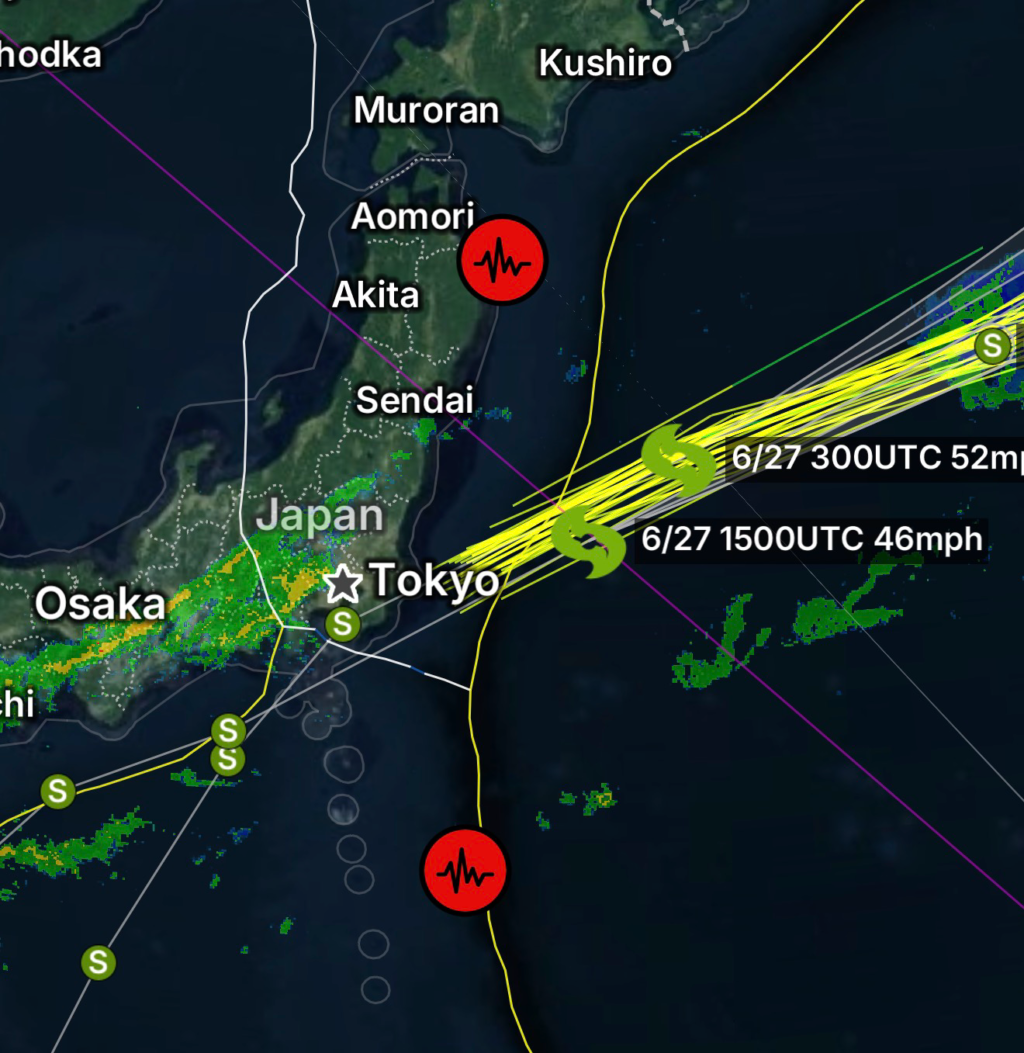
Japan experienced two notable earthquakes on June 27, 2026, with one occurring east-northeast (ENE) of Noda near the Pacific coast of Honshu and another centered in the Izu Islands region. Both earthquakes occurred in one of the world’s most seismically active regions as residents continue to monitor ongoing tectonic activity.
Earthquake ENE of Noda, Japan
The stronger of the two earthquakes struck ENE of Noda, Japan, with a preliminary magnitude of approximately 4.8. The earthquake occurred offshore near eastern Honshu, where the Pacific Plate interacts with the surrounding tectonic boundaries.
Although the shaking was felt in parts of eastern Japan, there were no immediate reports of significant damage or injuries. Authorities also reported no tsunami threat associated with the earthquake. (SMS Tsunami Warning)
Earthquake in the Izu Islands Region
Earlier the same day, another earthquake measuring approximately magnitude 4.5 occurred in the Izu Islands region, south of Tokyo. The Izu Island chain frequently experiences earthquakes due to the complex interaction between the Philippine Sea Plate and nearby tectonic boundaries.
The event occurred beneath the Pacific Ocean and likewise did not generate a tsunami warning. Seismologists continue to monitor the area for possible aftershocks, although earthquakes of this size are common within the region. (SMS Tsunami Warning)
Why Japan Experiences Frequent Earthquakes
Japan sits along the Pacific Ring of Fire, where multiple tectonic plates meet. The country experiences thousands of earthquakes every year, ranging from minor tremors to powerful seismic events.
The ENE of Noda and Izu Islands earthquakes are reminders of the constant geological activity affecting the region. Most moderate earthquakes cause little damage thanks to Japan’s strict building codes and advanced earthquake early warning systems.
Tropical Storm Mekkhala Status
Meanwhile, Tropical Storm Mekkhala continues moving across the western Pacific. At this time, the storm remains separate from Japan’s earthquake activity, as tropical cyclones and tectonic earthquakes are unrelated natural hazards.
Meteorologists continue monitoring Mekkhala’s track for any impacts to shipping routes and nearby island communities, while residents across the western Pacific are encouraged to stay updated with the latest tropical weather forecasts. (SMS Tsunami Warning)
Safety Reminder
Residents in earthquake-prone regions should:
- Drop, Cover, and Hold On during strong shaking.
- Keep an emergency supply kit readily available.
- Monitor official earthquake and tsunami alerts.
- Be prepared for possible aftershocks following moderate earthquakes.
While neither of today’s earthquakes resulted in tsunami warnings or widespread damage, preparedness remains essential in one of the world’s most active seismic regions.