
















Earthquake Report: SW of Bandar Lampung, Indonesia – Seismic Activity in the Sunda Strait Region
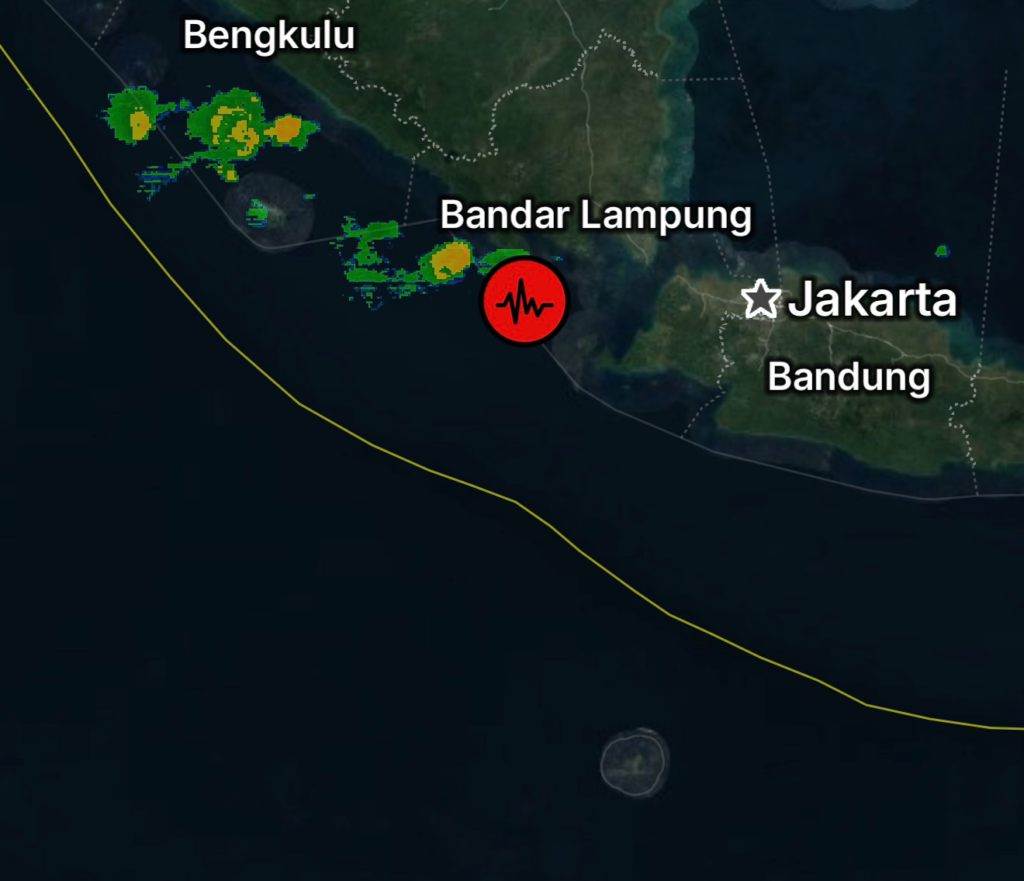
A mild earthquake was recorded southwest of Bandar Lampung, Indonesia, highlighting ongoing seismic activity across one of the most tectonically active regions on Earth. The event occurred in the vicinity of the Sunda Strait, an area known for frequent earthquakes due to the complex interaction between the Indo-Australian, Eurasian, and Pacific tectonic plates.
Event Overview
The earthquake was detected southwest of Bandar Lampung, the capital city of Lampung Province on Sumatra Island. According to regional seismic monitoring data, this type of event is typically associated with shallow subduction-zone movement or minor fault adjustments beneath the seafloor.
While exact parameters such as magnitude and depth can vary depending on final seismic analysis, earthquakes in this region are commonly in the minor to light range and are often felt weakly or not at all on land.
Tectonic Setting
Indonesia sits along the Pacific “Ring of Fire,” one of the most seismically active zones in the world. The area southwest of Bandar Lampung lies near the Sunda subduction zone, where the Indo-Australian Plate is actively pushing beneath the Eurasian Plate.
This ongoing subduction process is responsible for:
- Frequent earthquakes (ranging from minor to major events)
- Volcanic activity across Sumatra and Java
- Tsunami risk in coastal regions, especially along the Sunda Strait
The nearby volcanic island system, including Anak Krakatau, also contributes to complex seismic and volcanic interactions in the region.
Impact and Observations
At this time, no significant damage or casualties have been reported from this specific offshore earthquake southwest of Bandar Lampung. Events of this magnitude are typically too small to cause structural impacts but serve as important reminders of the region’s persistent seismic activity.
Residents in coastal Lampung and surrounding areas may occasionally feel light shaking depending on the depth and distance of the epicenter.
Regional Seismic Activity Context
Southern Sumatra and the Sunda Strait region regularly experience seismic swarms and small earthquakes. These are monitored closely by Indonesia’s Meteorology, Climatology, and Geophysics Agency (BMKG), which provides real-time updates and tsunami alerts when necessary.
Even smaller earthquakes in this region are scientifically important because they help seismologists:
- Track stress buildup along subduction faults
- Assess tsunami potential
- Improve early warning systems
Safety Reminder
Although this event was minor, Indonesia’s location on active plate boundaries means preparedness is always important. Coastal residents are encouraged to:
- Stay aware of official BMKG alerts
- Know evacuation routes for tsunami risk zones
- Prepare emergency supplies for earthquake readiness
Conclusion
The earthquake southwest of Bandar Lampung is another example of the constant geological activity shaping Indonesia’s landscape. While this specific event appears minor, it underscores the importance of continued seismic monitoring in one of the world’s most active earthquake regions.