









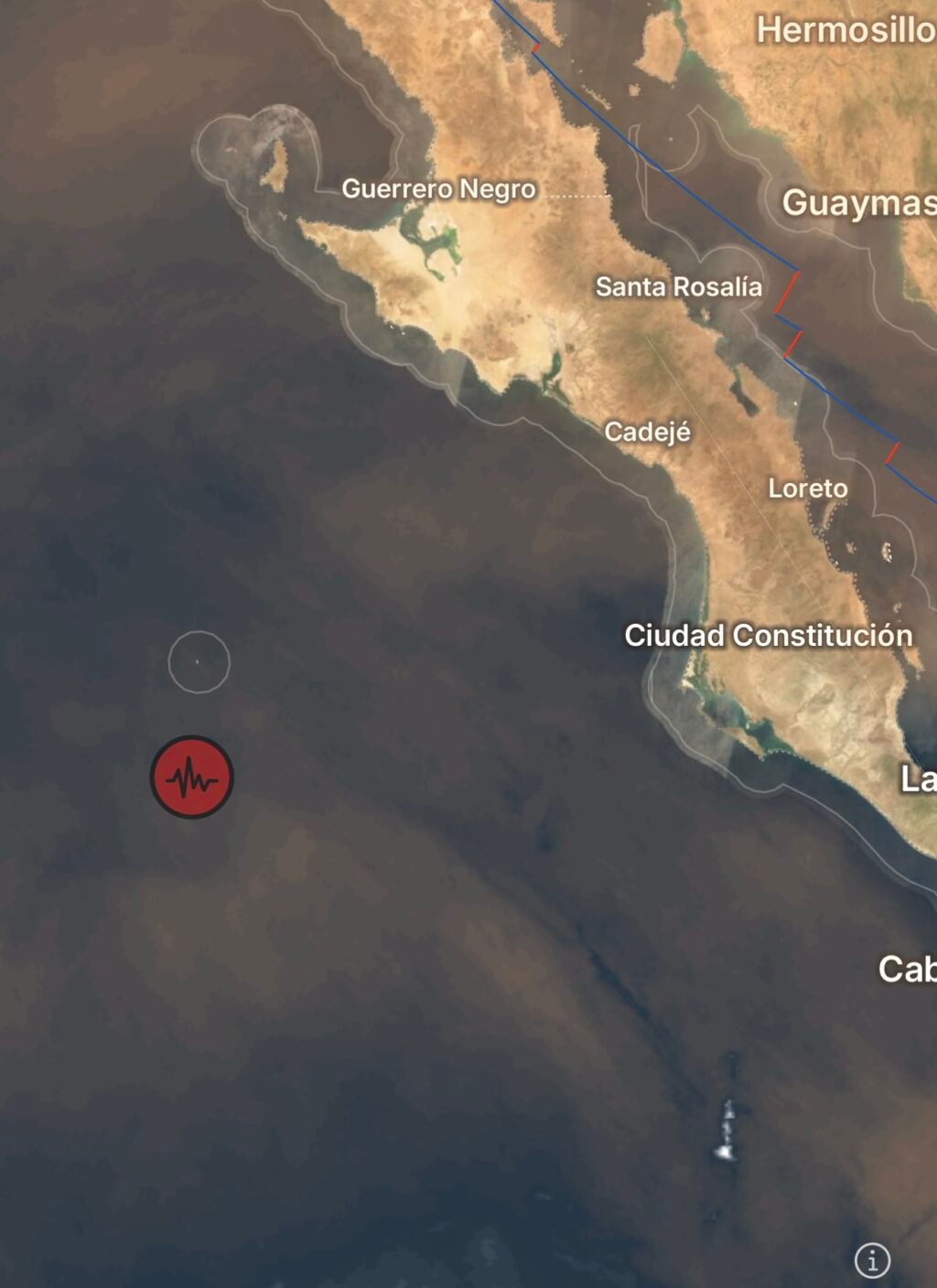
Magnitude 4.6 Earthquake Strikes Off the Coast of Baja California
A magnitude 4.6 earthquake was reported off the coast of Baja California, Mexico, adding to ongoing seismic activity along the tectonically active Pacific margin. The earthquake occurred offshore, where the Pacific Plate and North American Plate interact through a complex network of faults and fracture zones. Preliminary reports indicate that the quake occurred beneath the ocean floor and did not generate a tsunami threat. (FOX Weather)
Where the Earthquake Occurred
The Baja California region is one of the most seismically active areas in North America. Located along the boundary between major tectonic plates, earthquakes ranging from minor tremors to stronger seismic events occur regularly throughout the region. Offshore earthquakes are especially common in the Gulf of California and along the Pacific coastline due to ongoing plate movement. (USGS Earthquake Hazards)
Residents in some coastal communities may have experienced light shaking, particularly in areas closest to the epicenter. At this time, there have been no widespread reports of significant damage or injuries associated with the earthquake. (FOX Weather)
Understanding a Magnitude 4.6 Earthquake
A magnitude 4.6 earthquake is generally classified as a light to moderate seismic event. While capable of being felt by people near the epicenter, earthquakes of this size typically cause little to no structural damage, especially when located offshore.
Potential impacts can include:
- Brief shaking of buildings and homes
- Rattling windows and household objects
- Minor rockslides in coastal or mountainous terrain
- Temporary concern among residents in affected areas
The severity of shaking often depends on depth, distance from the epicenter, and local geological conditions.
Why Baja California Experiences Frequent Earthquakes
Baja California sits along an active tectonic boundary where the Pacific Plate moves northwest relative to the North American Plate. This movement creates stress that is periodically released through earthquakes. Scientists closely monitor the region because it is capable of producing stronger earthquakes, although most events are relatively small. (Earthquake List)
Recent years have seen numerous offshore earthquakes in the Gulf of California and surrounding waters, highlighting the region’s continuous seismic activity. (Earthquake List)
Tsunami Threat Assessment
Earthquakes occurring offshore often raise questions about tsunami potential. However, a magnitude 4.6 earthquake is generally too small to generate a significant tsunami, particularly if there is limited vertical movement of the seafloor. No tsunami warnings, watches, or advisories were issued following this event. (FOX Weather)
Earthquake Safety Reminders
Even moderate earthquakes serve as an important reminder for residents in seismically active regions to remain prepared.
Safety recommendations include:
- Secure heavy furniture and appliances.
- Maintain an emergency preparedness kit.
- Have a family communication plan.
- Know safe shelter locations within your home.
- Stay informed through official emergency management and seismic monitoring agencies.
Looking Ahead
Seismologists will continue monitoring the area for possible aftershocks, which are common following earthquakes. While no significant impacts have been reported, the event underscores the importance of earthquake preparedness throughout Baja California and neighboring regions.
Radar Watch HQ will continue monitoring seismic activity across North America and provide updates as new information becomes available.