





Powerful thunderstorms swept across parts of Colorado on Monday, producing large hail, damaging winds, heavy rain, and even tornado concerns in some areas. Reports from the Denver metro area and foothills indicated hail ranging from quarter-sized to golf-ball-sized, with some locations experiencing even larger stones.
One of the hardest-hit locations was the Evergreen area west of Denver, where a severe hailstorm dropped golf-ball-sized hail at a local golf course. Witnesses described the impact as sounding like “gunshots” as hailstones struck vehicles, roofs, and the ground.
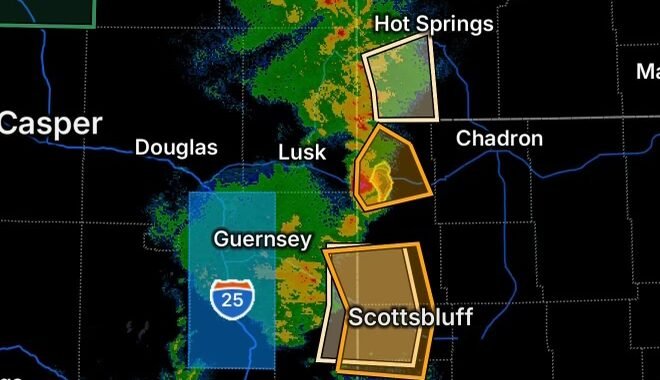
The storms developed in an environment favorable for severe weather across eastern Colorado. The National Weather Service had warned that very large hail, damaging wind gusts, and isolated tornadoes were possible as strong instability and wind shear combined over the region.
Why Colorado Gets Such Large Hail
Colorado is one of the most hail-prone states in the United States because:
- High elevation allows storms to develop rapidly.
- Cold air aloft helps hailstones freeze and grow.
- Strong thunderstorm updrafts can keep hail suspended long enough to become very large.
- The Front Range often acts as a trigger for severe thunderstorm development.
When powerful updrafts repeatedly lift hailstones above the freezing level, they accumulate layers of ice before eventually becoming too heavy and falling to the ground.
Impacts from Monday’s Storms
- Vehicle damage from large hail.
- Broken tree limbs and scattered property damage.
- Localized flooding from intense rainfall.
- Flight delays at Denver International Airport.
- Tornado watches issued for portions of eastern Colorado.