

















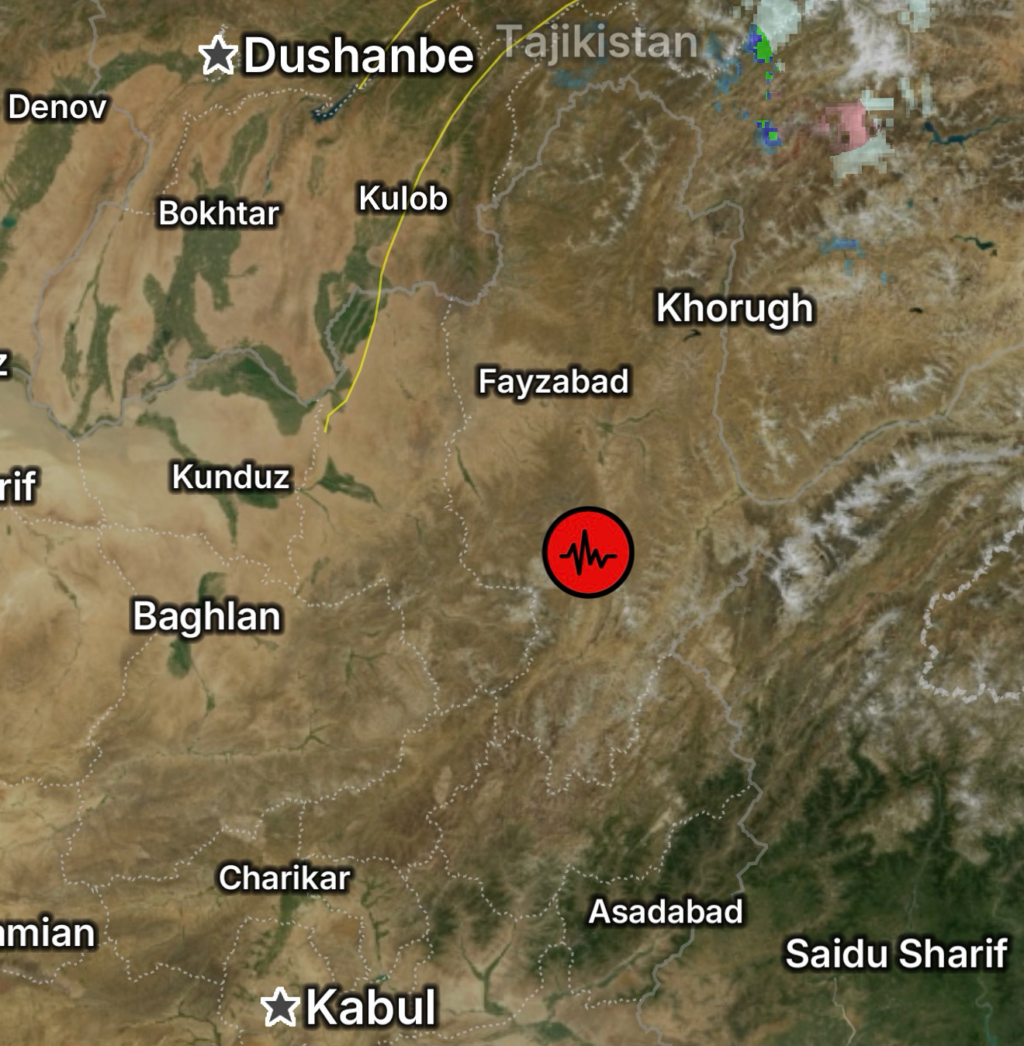
A strong earthquake struck northeastern Afghanistan near the Hindu Kush region, with seismic activity recorded south of Jurm in Badakhshan Province. The event occurred in a highly active tectonic zone known for frequent deep-focus earthquakes caused by the ongoing collision between the Indian and Eurasian tectonic plates.
Seismic Details
According to early seismic reports, the earthquake had a magnitude of approximately 6.2, with the epicenter located about 43 kilometers south of Jurm, Afghanistan. The quake originated at a significant depth of roughly 215 kilometers, classifying it as a deep-focus earthquake.
Deep earthquakes like this often spread shaking over a wide area while reducing the likelihood of severe surface rupture at the epicenter.
Regional Impact
The tremors were felt across a large portion of the region, including:
- Northern Afghanistan (including Kabul and surrounding provinces)
- Pakistan (Khyber Pakhtunkhwa and Islamabad regions)
- Parts of northern India, including Jammu & Kashmir and Delhi-NCR
Despite the wide reach of the shaking, early reports indicated no immediate casualties or major structural damage.
Residents in several areas reported brief panic as buildings swayed and people evacuated homes and offices as a precaution.
Geological Context
The Hindu Kush region is one of the most seismically active zones in Central Asia. Earthquakes here are typically:
- Deep-focus (often 100–250 km below the surface)
- Caused by subduction-like processes and slab break-off within the Earth’s crust
- Capable of being felt across multiple countries due to depth and energy distribution
This region regularly experiences moderate to strong earthquakes, many of which occur without significant surface damage despite their magnitude.
Aftershocks and Monitoring
Seismologists continue to monitor the region for possible aftershocks. While deep earthquakes typically produce fewer aftershocks than shallow ones, the complexity of the Hindu Kush fault system means additional tremors cannot be ruled out.
Safety Reminder
Even when damage is not immediately reported, earthquakes of this magnitude serve as a reminder for preparedness in seismic zones:
- Identify safe shelter spots indoors
- Avoid standing near windows or heavy objects
- Have an emergency plan ready, especially in multi-story buildings
- Stay updated through official seismic monitoring agencies
Conclusion
The south of Jurm earthquake is part of the ongoing tectonic activity shaping the Hindu Kush region. While no major destruction has been reported so far, its wide felt area highlights the powerful nature of deep-focus earthquakes in Afghanistan and surrounding countries.