



Extreme Heat and Monsoon Storms Create Dangerous Weather Pattern Across Arizona
A combination of dangerous heat and powerful monsoon thunderstorms is impacting southern and central Arizona, creating a complex weather situation with threats ranging from heat-related illness to flash flooding and damaging winds.
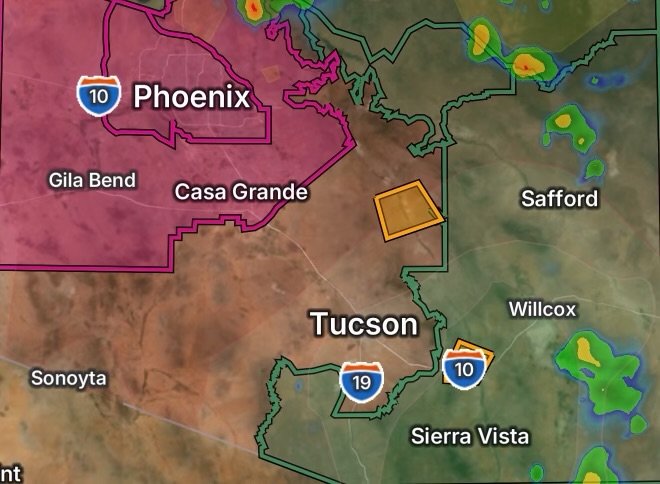
An Extreme Heat Warning remains in effect for portions of south-central Arizona, including the Phoenix metropolitan area, where temperatures continue to reach dangerous levels. Meanwhile, moisture from the annual North American Monsoon is fueling thunderstorms capable of producing heavy rainfall, flash flooding, lightning, and strong winds across southeastern Arizona.
Current Weather Alerts Across Southern Arizona
🔥 Extreme Heat Warning — South-Central Arizona
Communities across south-central Arizona, including the Phoenix metro, are experiencing prolonged extreme heat.
The combination of high temperatures and increasing humidity during monsoon season can make conditions feel even more dangerous. Heat stress can develop quickly, especially for outdoor workers, vulnerable populations, pets, and anyone without adequate cooling.
Residents should:
- Limit outdoor activity during the hottest afternoon hours
- Drink plenty of water and avoid dehydration
- Check on elderly neighbors and vulnerable individuals
- Never leave children or pets inside vehicles
🌧️ Flash Flood Warning — Southwestern Graham County
A Flash Flood Warning is impacting southwestern Graham County in southeastern Arizona as monsoon thunderstorms produce heavy rainfall over a short period.
Monsoon storms can quickly overwhelm normally dry washes, creating dangerous conditions even away from the strongest rainfall. Desert areas are especially vulnerable because hard ground and rocky terrain can cause rapid runoff.
Never attempt to drive through flooded roads or washes. Water levels can rise rapidly and sweep vehicles away.
⛈️ Severe Thunderstorm Warning — East-Central Pinal County
A Severe Thunderstorm Warning is in effect for east-central Pinal County, where storms may bring:
- Damaging wind gusts
- Frequent lightning
- Blowing dust
- Brief heavy rainfall
- Localized flooding
Monsoon thunderstorms often develop quickly during the afternoon and evening hours as intense summer heating combines with increasing atmospheric moisture.
⛈️ Severe Thunderstorm Warning — Western Cochise County
Western Cochise County is also facing severe thunderstorm potential as storms move through southeastern Arizona.
Residents should prepare for:
- Sudden wind changes
- Lightning hazards
- Reduced visibility from dust storms
- Heavy rain near washes and low-lying areas
🌊 Flood Watch — Southeast Arizona
A Flood Watch remains in effect for portions of southeast Arizona, including:
- Graham County
- Greenlee County
- Cochise County
- Santa Cruz County
Additional thunderstorms could produce repeated rounds of rainfall, increasing the potential for flash flooding in vulnerable locations.
How Monsoon Season Is Changing Arizona’s Recent Weather Trends
Arizona’s summer weather is defined by a dramatic transition from extreme dry heat to humid, storm-filled conditions during monsoon season.
The North American Monsoon typically brings moisture northward from Mexico and the Gulf of California, increasing thunderstorm activity across Arizona from June through September. These storms can provide beneficial rainfall but also create dangerous hazards such as flash floods, lightning, damaging winds, and dust storms.
1. More Humidity Is Making Heat More Dangerous
Before monsoon moisture arrives, Arizona experiences intense dry heat. Once humidity increases, nighttime temperatures often remain warmer and the body has more difficulty cooling itself.
In Phoenix and other desert communities, prolonged extreme heat has become a major concern because temperatures can remain dangerously high for extended periods.
2. Monsoon Storms Create Rapid Weather Changes
Arizona’s monsoon pattern can create a dramatic shift in conditions:
Morning:
☀️ Clear skies and extreme heat
Afternoon:
☁️ Rapid cloud development
Evening:
⛈️ Thunderstorms, lightning, strong winds, and flooding
These storms can form quickly, meaning communities may go from dangerous heat to dangerous flooding within hours.
3. Flash Flood Risk Increases Across Desert Terrain
Desert landscapes do not absorb rainfall quickly. When intense thunderstorms develop, runoff can move rapidly through:
- Dry riverbeds
- Washes
- Canyons
- Low-water crossings
A storm miles away can send floodwaters into areas that are not currently receiving rain.
4. Severe Storms Become More Frequent During Peak Monsoon
The combination of extreme daytime heating and increased moisture creates an environment favorable for stronger thunderstorms.
Storms can produce:
- Microbursts
- Hail
- Strong straight-line winds
- Dust storms (haboobs)
- Dangerous lightning
Safety Tips During Arizona Monsoon Season
✅ Avoid flooded roads and washes
✅ Move indoors when lightning approaches
✅ Secure outdoor objects before storms arrive
✅ Have multiple ways to receive weather alerts
✅ Carry extra water during extreme heat
✅ Avoid hiking during peak afternoon storm hours
Bottom Line
Arizona is experiencing a classic but dangerous summer weather pattern: extreme desert heat colliding with monsoon moisture. While monsoon storms provide much-needed rainfall, they also increase risks for flash flooding, severe thunderstorms, and dangerous travel conditions.
Residents across Phoenix, Pinal, Graham, Cochise, Greenlee, and Santa Cruz counties should remain weather aware as additional heat and storm threats continue across the Southwest.
Radar Watch HQ will continue monitoring Arizona’s heat alerts, monsoon storms, and severe weather threats across the Southwest.

Radar Watch HQ Top 5 Essentials for Extreme Heat
Affiliate Disclosure: As an Amazon Associate, Radar Watch HQ earns from qualifying purchases.
When an Extreme Heat Watch or Heat Advisory is in effect, having the right gear can help you stay safer and more comfortable.
A compact, battery-powered fan provides cooling while traveling, working outdoors, waiting at events, or during power outages.
2. Insulated Water Bottle or Tumbler
A high-quality insulated bottle or cup keeps water cold for hours, making it easier to stay hydrated throughout the day.
A handheld misting fan or spray bottle delivers instant cooling by combining fine water mist with airflow.
Portable air conditioners, evaporative coolers (where appropriate), or high-performance tower fans can help reduce indoor temperatures during dangerous heat.
5. Electrolyte Hydration Packets or Drinks
Electrolyte supplements help replace minerals lost through heavy sweating and support hydration during prolonged heat exposure.