
Little Knife Fire Expands to 6,000 Acres Near Ottertrack Lake
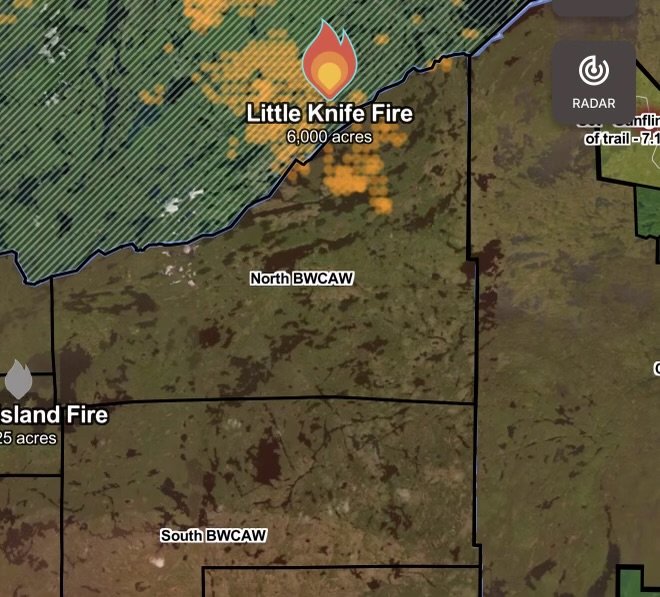
The Little Knife Fire has grown to approximately 6,000 acres after burning north of Ottertrack Lake in Ontario, Canada, before crossing the international border into northeastern Minnesota. Fire officials continue to monitor the rapidly changing wildfire as suppression efforts increase throughout the remote Boundary Waters region.
The wildfire is burning in rugged wilderness terrain near the Boundary Waters Canoe Area Wilderness (BWCAW), making firefighting operations difficult due to limited road access, dense forests, and ongoing hot, dry weather.
Evacuation Orders in Cook and Lake Counties
Authorities have issued evacuation orders and expanded evacuation designations across portions of Cook County and Lake County as a precaution while firefighters work to slow the fire’s spread.
Current emergency actions include:
- Evacuation orders affecting portions of the Boundary Waters region
- Increased evacuation readiness along sections of the Gunflint Trail
- Temporary closures of wilderness recreation areas and campgrounds
- Continued evacuation of remaining BWCAW campers by Forest Service personnel
- Public access restrictions to help protect residents, visitors, and emergency responders
Residents should continue monitoring official emergency notifications, as wildfire conditions can change rapidly with shifting winds.
Fire Behavior and Weather Concerns
The Little Knife Fire was sparked following widespread lightning activity across northern Minnesota and Ontario. Since then, extremely dry vegetation, hot temperatures, and gusty winds have fueled rapid fire growth.
Fire officials report the wildfire has generally been moving from north to south, with smoke affecting much of northeastern Minnesota and portions of Ontario.
Challenges Facing Firefighters
The remote wilderness location presents several obstacles for suppression crews, including:
- Limited vehicle access
- Dense forest fuels
- Steep and rocky terrain
- Heavy smoke reducing visibility
- Continued hot and dry weather
Aircraft, helicopters, and additional firefighting resources have been deployed as agencies from both Canada and the United States coordinate wildfire response efforts.
Safety Tips for Residents and Visitors
Anyone living near evacuation zones or planning travel into northeastern Minnesota should:
- Follow all evacuation orders immediately.
- Avoid closed recreation areas and wilderness entry points.
- Prepare emergency kits and important documents.
- Monitor local emergency alerts for changing fire conditions.
- Be aware of hazardous smoke that may reduce air quality far from the fire itself.
Looking Ahead
Fire managers expect wildfire activity to remain elevated until cooler temperatures, higher humidity, or widespread rainfall arrive. With ongoing drought conditions and additional wildfire activity across northern Minnesota and Ontario, residents should remain prepared for rapidly changing conditions.
Authorities continue to prioritize life safety while protecting homes, infrastructure, and the internationally significant wilderness surrounding the Boundary Waters Canoe Area Wilderness.
Affiliate Disclosure: As an Amazon Associate, Radar Watch HQ earns from qualifying purchases.
Radar Watch HQ Top 5 Essentials – Wildfire Preparedness
Helps reduce exposure to wildfire smoke, ash, and fine particles.
Provides alerts during power outages or when cell service is unavailable.
Go Bag / Emergency Preparedness Kit
Includes important documents, medications, water, food, flashlights, and basic supplies for quick evacuation.
Fire-Resistant Outdoor Supplies
Items such as fire-resistant gloves, protective clothing, and tools for creating defensible space around property.
Portable Power Bank & Backup Charging Supplies
Keeps phones and emergency devices powered during wildfire emergencies.