

California Coast Marine Alerts: High Surf, Dangerous Conditions, and Eastern Pacific Impacts
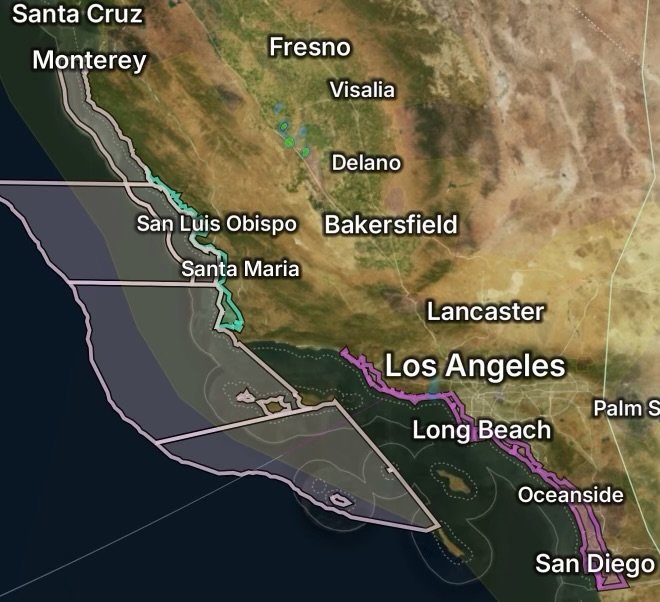
Multiple marine hazards are impacting portions of the California coastline as elevated surf, dangerous currents, and hazardous boating conditions continue. The National Weather Service has issued marine advisories affecting waters from Point Sal to Santa Cruz Island and westward 60 nautical miles, including San Miguel and Santa Rosa Islands.
Meanwhile, Beach Hazards Statements and High Surf Advisories are highlighting increased risks for beachgoers across portions of Central and Southern California.
Small Craft Advisory Issued for Offshore Waters
A Small Craft Advisory is in effect for the waters from Point Sal to Santa Cruz Island and westward 60 nautical miles, including San Miguel and Santa Rosa Islands. These waters are experiencing hazardous marine conditions that can create dangerous travel for smaller vessels.
Strong northwest winds, elevated seas, and rough ocean conditions can produce:
- Choppy and confused seas
- Difficult navigation conditions
- Stronger currents near coastal areas
- Increased risk for inexperienced boat operators
Mariners are encouraged to monitor updated marine forecasts and use caution before heading offshore.
Beach Hazards Expand Along California Coast
Beach Hazards Statements are impacting:
- San Luis Obispo County Beaches
- Santa Barbara County Central Coast Beaches
Visitors should be aware that increased wave energy can lead to:
- Strong rip currents
- Dangerous swimming conditions
- Sudden changes in surf height
- Increased coastal erosion
Even experienced swimmers can face challenges when ocean conditions become elevated.
High Surf Advisory Targets Southern California Beaches
High Surf Advisories are affecting:
- San Diego County Coastal Areas
- Orange County Coastal Areas
Large waves generated by Pacific storm systems can create dangerous surf conditions, especially around jetties, piers, and exposed beaches.
Beachgoers should avoid turning their back on the ocean, stay away from rocks and cliffs, and follow local beach safety guidance.
How Eastern Pacific Tropical Activity Is Influencing California Weather
The Eastern Pacific remains an important factor in California’s coastal weather pattern. Tropical systems developing far offshore can send long-period swells northward toward the California coastline, even when the storms do not make landfall. Recent Pacific tropical activity has been capable of producing increased humidity, higher cloud cover, and larger ocean swells along the West Coast.
As tropical systems strengthen over warmer Pacific waters, they can contribute to:
- Larger ocean swells reaching California beaches
- Stronger rip currents
- Higher surf conditions
- Increased coastal hazards
While most Eastern Pacific storms remain offshore, their energy can travel hundreds or thousands of miles through the ocean, creating impacts far away from the storm center.
Recent Weather Pattern Across California
California’s recent pattern has featured a combination of marine influence, coastal cloud cover, and increased Pacific moisture. Tropical moisture from offshore systems can interact with existing weather patterns, occasionally bringing unusual humidity, high clouds, and even isolated precipitation chances in some areas.
The combination of warmer Pacific waters and active tropical development can keep coastal communities alert for changing surf conditions throughout the summer.
What Residents and Visitors Should Know
Before visiting California beaches or heading offshore:
- Check the latest National Weather Service alerts
- Avoid swimming near strong currents
- Use caution around large waves and rocky shorelines
- Boaters should prepare for rapidly changing ocean conditions
- Follow local lifeguard recommendations
Coastal hazards can develop quickly, especially when Pacific swell energy combines with local winds and currents.
Stay Weather Aware With Radar Watch HQ
Radar Watch HQ continues monitoring marine alerts, coastal hazards, and Eastern Pacific tropical activity to provide the latest weather intelligence. Stay updated with current alerts and changing conditions before heading to the coast.
Radar Watch HQ Top 5 Marine Essentials
Affiliate Disclosure: As an Amazon Associate, Radar Watch HQ earns from qualifying purchases.
🌊 1. U.S. Coast Guard-Approved Life Jacket
A properly fitted life jacket is the most important piece of safety equipment for every passenger onboard.
Best for: Recreational boaters, anglers, kayakers, and paddleboarders.
⚓ 2. Marine Emergency Radio (NOAA Weather Radio)
Receive real-time NOAA Weather Radio alerts, marine forecasts, and emergency warnings—even when cell service is unavailable.
Best for: Offshore and coastal boating.
🔦 3. Rechargeable Waterproof LED Flashlight
A bright waterproof flashlight is essential for emergencies, low visibility, nighttime navigation, and signaling for help.
Best for: Every boat emergency kit.
🧰 4. Marine First Aid Kit
A waterproof first aid kit stocked with bandages, antiseptic, medications, and emergency supplies for injuries on the water.
Best for: Every vessel, regardless of size.
🧭 5. Waterproof Dry Bag
Protect phones, wallets, charts, keys, electronics, and emergency supplies from water damage during storms or rough seas.
Best for: Boaters, kayakers, paddleboarders, and beachgoers.
🛒 Radar Watch HQ Marine Safety Picks
Prepare before you head out on the water. Our recommended marine safety essentials can help keep you and your crew safe during changing weather conditions.