


Timber Fire Update: What Residents Need to Know
The Timber Fire continues to burn in Monterey County near Big Sur and the Ventana Wilderness, with fire activity remaining a serious concern as hot, dry weather increases wildfire danger across the region.
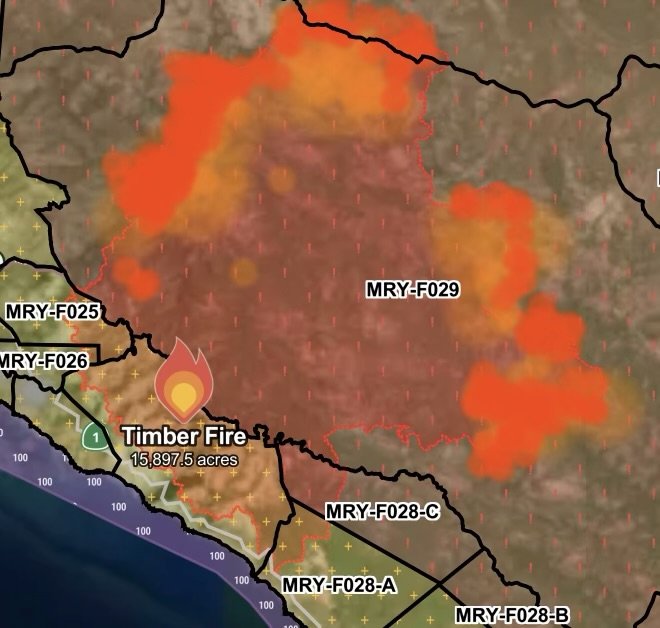
As of the latest available incident information, the Timber Fire has burned approximately 12,616 acres and is 25% contained. The fire began August 8 southeast of Loma Vista in the Los Padres National Forest and has expanded primarily into rugged wilderness terrain. More than 1,200 firefighters have been assigned to the incident. (CAL FIRE)
While portions of the fire are away from populated areas, officials continue to monitor fire movement closely because warm temperatures, low humidity and dry vegetation can allow wildfire activity to increase quickly.
Evacuation Orders Remain a Major Concern
Evacuation information can change rapidly as firefighters assess fire behavior.
CAL FIRE lists evacuation orders for several Monterey County zones, including MRY-F015-C, MRY-D082, MRY-D090, MRY-D089, MRY-D091, MRY-F031-A and MRY-F028-B. An evacuation order means there is an immediate threat to life and residents in the affected area are legally required to leave. (CAL FIRE)
Residents should not wait for flames to become visible before leaving. Wildfires can move quickly through steep terrain, and smoke, falling debris, road closures and changing wind conditions can make evacuation increasingly difficult.
Residents in evacuation-warning areas should also be prepared to leave quickly if an order is issued.
Highway 1 Update
Highway 1 near Big Sur, which was temporarily affected by the fire, has reopened. However, reopening does not mean the wildfire threat has ended. Fire officials continue to monitor conditions around the highway and surrounding terrain. (San Francisco Chronicle)
Drivers should check current road conditions before traveling through the area and never drive around barricades or into closed fire zones.
Air Quality and Timber Fire Smoke
Smoke from the Timber Fire has been affecting areas well beyond the immediate fire perimeter. Recent reports indicate smoke has reached portions of the southern Santa Clara Valley, East Bay, Central Valley and Sierra Nevada foothills. (San Francisco Chronicle)
Wildfire smoke contains fine particles that can travel long distances. Even communities far from the flames can experience hazy skies and deteriorating air quality.
Residents should:
- Check current air-quality conditions before spending extended time outdoors.
- Reduce strenuous outdoor activity when smoke levels rise.
- Keep windows and doors closed when outdoor air quality is poor.
- Use air filtration indoors when possible.
- Avoid adding indoor pollution from candles, fireplaces or other sources.
- Follow local air-quality advisories and public-health guidance.
- Pay particular attention to changing conditions overnight and during periods when smoke settles near the ground.
People who develop significant breathing difficulty, chest discomfort or other concerning symptoms should seek appropriate medical assistance.
Why Rising Heat Is Increasing the Wildfire Threat
The weather surrounding the Timber Fire is an important part of the story.
Warm temperatures increase evaporation and dry vegetation. When grasses, brush, leaves and other fuels lose moisture, they can ignite more easily and burn more efficiently.
The latest fire information indicates warm and dry conditions with low relative humidity in higher elevations around the fire. Fire officials expect these conditions to contribute to increased fire activity, particularly in areas where fuels remain dry. (CAL FIRE)
Heat + Dry Fuels = Faster Fire Potential
Extreme heat does not automatically start a wildfire. Instead, it can make existing fuels substantially more receptive to ignition and rapid burning.
The combination of:
High temperatures + low humidity + dry vegetation + wind = increased wildfire potential
can create difficult conditions for firefighters.
Hot weather can also increase the amount of water and moisture lost from vegetation. As fuels become drier, flames can spread more readily through grass, brush and woodland.
Excessive Heat Can Make Firefighting More Difficult
The heat creates challenges not only for the landscape but also for firefighters.
Crews working on a wildfire must manage heat exposure while operating in steep, rugged terrain, often while wearing heavy protective equipment and carrying firefighting tools.
At the Timber Fire, difficult terrain has already complicated suppression operations. Firefighters are using both ground resources and aircraft to work on portions of the fire that are difficult to access. (ABC7 San Francisco)
Meanwhile, warmer and drier weather can increase fire behavior between operational periods, requiring crews to continually reassess containment lines and fire movement.
What Residents Should Watch for Next
The Timber Fire is expected to remain an active situation as firefighters continue strengthening containment lines and monitoring movement through the Ventana Wilderness.
CAL FIRE reports that portions of the fire have been moving farther into wilderness areas, including toward the Lion Creek drainage and upper Carmel River basin. Fire activity has moderated in some areas, but warm and dry conditions are expected to continue supporting periods of visible smoke and increased fire activity. (CAL FIRE)
For residents and visitors, the most important factors to watch are:
1. Evacuation Changes
Evacuation orders and warnings can expand, contract or be lifted as conditions change.
2. Smoke and Air Quality
Smoke direction can change even when the fire itself has not moved significantly.
3. Heat
Hotter temperatures can dry fuels further and increase the potential for active fire behavior.
4. Wind
A change in wind direction or speed can rapidly alter where smoke travels and where flames spread.
5. Road Conditions
Fire activity, debris and firefighting operations can lead to sudden road restrictions or closures.
Timber Fire Preparedness: What to Do Now
If you live or stay anywhere near the affected area, do not wait until an evacuation order is issued to begin preparing.
Keep important documents, medications, chargers, food, water, pet supplies and essential personal items ready to go.
Make sure your vehicle has adequate fuel and that everyone in your household understands at least two possible evacuation routes.
If you receive an evacuation order, leave immediately and follow instructions from emergency officials.
Do not attempt to return until authorities announce that it is safe.
Radar Watch HQ Final Thoughts
The Timber Fire remains a significant wildfire threat in Monterey County, particularly as excessive heat, low humidity and dry fuels create conditions capable of supporting continued fire activity.
The fire has expanded considerably into the Ventana Wilderness, while evacuation orders remain in effect for multiple zones. At the same time, smoke continues to affect air quality across areas well beyond the immediate fire zone. (CAL FIRE)
For residents, the message is simple: stay informed, take evacuation orders seriously and do not underestimate the combination of wildfire smoke and extreme heat.
Conditions can change quickly. Monitor official Monterey County and CAL FIRE updates, keep evacuation supplies ready and be prepared to act before conditions become dangerous.
Stay weather-aware. Stay fire-aware. Stay prepared.
Affiliate Disclosure: As an Amazon Associate, Radar Watch HQ earns from qualifying purchases.
Radar Watch HQ Top 5 Essentials – Wildfire Preparedness
Helps reduce exposure to wildfire smoke, ash, and fine particles.
Provides alerts during power outages or when cell service is unavailable.
Go Bag / Emergency Preparedness Kit
Includes important documents, medications, water, food, flashlights, and basic supplies for quick evacuation.
Fire-Resistant Outdoor Supplies
Items such as fire-resistant gloves, protective clothing, and tools for creating defensible space around property.
Portable Power Bank & Backup Charging Supplies
Keeps phones and emergency devices powered during wildfire emergencies.