







Dangerous Heat and Poor Air Quality Affect Illinois, Indiana, Kentucky and Missouri
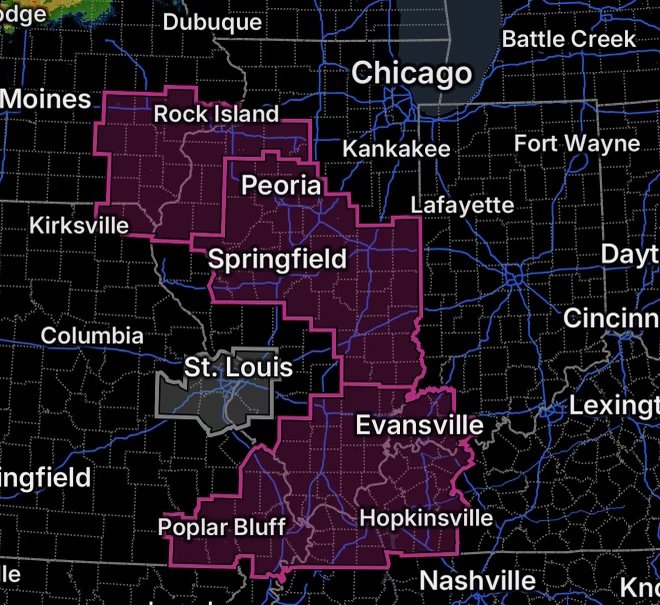
A broad stretch of the Midwest is facing extreme heat, with Extreme Heat Warnings covering large portions of Illinois, southwest Indiana, western Kentucky and southeast Missouri. Additional Extreme Heat Warnings extend across central, east central, southeast and west central Illinois, as well as portions of northern and western Illinois, eastern and southeastern Iowa, and northeast Missouri.
At the same time, an Air Quality Alert is affecting communities around the St. Louis metropolitan area, adding another layer of concern for residents spending time outdoors.
Extreme Heat Warning Covers a Large Portion of the Midwest
The most widespread heat threat includes all of southern Illinois, southwest Indiana, western Kentucky and southeast Missouri.
Additional areas under Extreme Heat Warnings include portions of:
- Central Illinois
- East central Illinois
- Southeast Illinois
- West central Illinois
- North central Illinois
- Northwest Illinois
- West central Illinois
- East central Iowa
- Southeast Iowa
- Northeast Missouri
With dangerous heat affecting such a large area, prolonged outdoor exposure can become hazardous, particularly during the afternoon when temperatures and heat stress are greatest.
Why Extreme Heat Can Become Dangerous
Extreme heat places additional stress on the body because the body must work harder to regulate its temperature. High humidity can make conditions even more dangerous by slowing the evaporation of sweat.
As a result, people can experience heat exhaustion or heat stroke, especially when working, exercising or spending extended periods outdoors.
Older adults, young children and people without reliable access to air conditioning can face greater risks. Pets and livestock can also be vulnerable.
Air Quality Alert Covers St. Louis Region
An Air Quality Alert is also in effect across several counties and the city of St. Louis.
Affected areas include:
- Madison County, Illinois
- Saint Clair County, Illinois
- Monroe County, Illinois
- Saint Charles County, Missouri
- Franklin County, Missouri
- Saint Louis County, Missouri
- Saint Louis City, Missouri
- Jefferson County, Missouri
Communities specifically included in the alert area include Alton, Edwardsville, Belleville, Cahokia, Saint Charles, Washington, Union, Sullivan and Saint Louis.
Poor air quality can make breathing more difficult, particularly for people with asthma or other respiratory sensitivities. Because extreme heat is occurring at the same time, residents may want to limit strenuous outdoor activity when conditions are at their worst.
Heat and Air Quality Can Create an Added Outdoor Risk
The combination of extreme heat and degraded air quality deserves additional attention.
Even people who normally tolerate warm weather well can become overheated during prolonged outdoor activity. Meanwhile, poor air quality can increase respiratory irritation.
Therefore, consider moving outdoor activities to the morning or evening when conditions are more favorable, while continuing to monitor local weather and air-quality updates.
How to Stay Safe During Extreme Heat
During the hottest part of the day:
- Stay in air-conditioned buildings whenever possible.
- Drink plenty of water before becoming thirsty.
- Avoid strenuous outdoor activity during peak heat.
- Wear lightweight, loose-fitting clothing.
- Take frequent breaks in shaded or air-conditioned locations.
- Never leave children or pets inside a parked vehicle.
- Check on elderly relatives, neighbors and anyone living alone.
- Watch for signs of heat exhaustion, including heavy sweating, weakness, dizziness, nausea and headache.
- Seek emergency medical assistance if someone develops confusion, loss of consciousness or other signs of heat stroke.
If you must spend time outdoors, take the heat seriously and allow your body plenty of opportunities to cool down.
Air Quality Safety Tips
When air quality is unhealthy:
- Reduce prolonged or strenuous outdoor activity.
- Consider moving exercise indoors.
- Keep windows and doors closed when outdoor air quality is poor.
- Follow local air-quality guidance.
- People with respiratory conditions should pay close attention to symptoms.
- If smoke, haze or other pollutants are present, avoid unnecessary exposure.
Radar Watch HQ Final Thoughts
The combination of widespread extreme heat and an Air Quality Alert makes this an important weather situation across the Midwest.
From southern Illinois and southwest Indiana to western Kentucky and southeast Missouri, dangerous heat is affecting a broad region. Meanwhile, communities around the St. Louis area are dealing with additional air-quality concerns.
Stay cool, stay hydrated and know the signs of heat illness. Check on vulnerable family members, neighbors and pets, and consider reducing strenuous outdoor activities while the most dangerous conditions persist.
Stay weather-aware with Radar Watch HQ and continue monitoring official local forecasts and alerts for changes in conditions.
Radar Watch HQ Top 5 Essentials for Extreme Heat
Affiliate Disclosure: As an Amazon Associate, Radar Watch HQ earns from qualifying purchases.
When an Extreme Heat Watch or Heat Advisory is in effect, having the right gear can help you stay safer and more comfortable.
A compact, battery-powered fan provides cooling while traveling, working outdoors, waiting at events, or during power outages.
2. Insulated Water Bottle or Tumbler
A high-quality insulated bottle or cup keeps water cold for hours, making it easier to stay hydrated throughout the day.
A handheld misting fan or spray bottle delivers instant cooling by combining fine water mist with airflow.
Portable air conditioners, evaporative coolers (where appropriate), or high-performance tower fans can help reduce indoor temperatures during dangerous heat.
5. Electrolyte Hydration Packets or Drinks
Electrolyte supplements help replace minerals lost through heavy sweating and support hydration during prolonged heat exposure.