




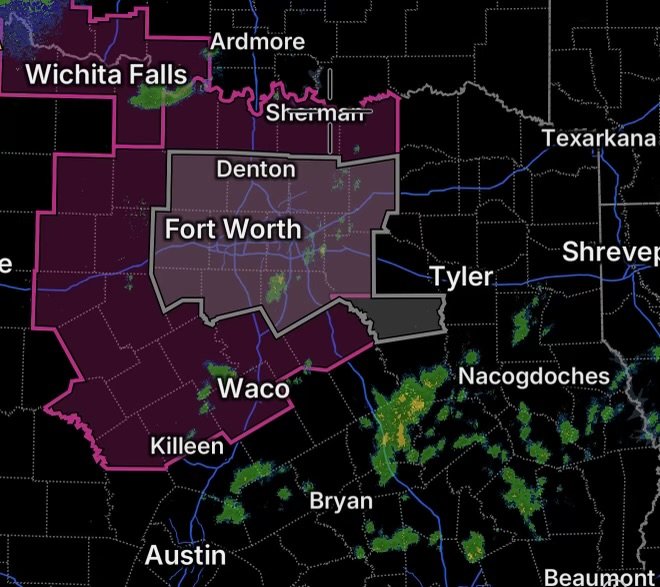
Dallas-Fort Worth Air Quality Alert and Dangerous Heat
The Dallas-Fort Worth area is under an Air Quality Alert as dangerous summer heat continues across North and Central Texas. At the same time, Extreme Heat Warnings are affecting portions of Texas and Oklahoma, creating conditions that can become hazardous quickly for people spending time outdoors.
The combination of intense heat, humidity and unhealthy air can place additional stress on the body. Residents should limit prolonged outdoor exposure, stay hydrated and monitor the latest local weather and air-quality information.
Recent forecasts have shown the Dallas-Fort Worth region experiencing exceptionally high temperatures, with heat-index values potentially reaching dangerous levels. (Chron)
Air Quality Alert for the Dallas-Fort Worth Area
Air quality can deteriorate during periods of persistent heat, particularly when atmospheric conditions limit the dispersion of pollutants.
For people with asthma, respiratory conditions or increased sensitivity to air pollution, outdoor activity may become more difficult when air quality declines.
What Residents Should Do
Consider reducing strenuous outdoor activities, especially during the hottest part of the afternoon.
Keep windows and doors closed when outdoor air quality is poor, if possible, and use indoor air conditioning or air filtration to maintain more comfortable indoor conditions.
People who develop breathing difficulty, chest discomfort or other concerning symptoms should move indoors and seek appropriate medical assistance.
Extreme Heat Warning Across North and Central Texas
The extreme heat threat extends beyond the Dallas-Fort Worth metroplex into portions of North and Central Texas.
Forecast information indicates that a weak front may provide some relief to portions of North Texas, but the improvement is expected to be limited. Areas south of the boundary could remain exceptionally hot, with Central Texas potentially reaching the 104°F to 106°F range. (Chron)
Texas Counties Included in the Heat Threat
The current threat includes portions of Clay County, Wichita County and Wilbarger County, Texas.
These communities can experience rapid heat buildup during the afternoon, particularly when temperatures climb into the triple digits.
Outdoor workers, agricultural workers, first responders, travelers and anyone participating in outdoor activities should plan around the heat rather than attempting to push through it.
Extreme Heat Warning Expands Into Oklahoma
Dangerous heat is also affecting portions of Oklahoma, including:
- Jefferson County
- Cotton County
- Jackson County
- Tillman County
The Southern Plains have experienced an extended period of unusually hot temperatures, with widespread heat indices reaching dangerous levels during this heat event. (Beaumont Enterprise)
Why Extreme Heat Can Become Dangerous
Extreme heat becomes particularly dangerous when the body cannot effectively cool itself.
High humidity reduces the evaporation of sweat, which is one of the body’s primary cooling mechanisms. Consequently, people can become overheated even when they are accustomed to hot summer weather.
Heat exhaustion can develop into heat stroke, which is a medical emergency.
Who Is Most Vulnerable?
Everyone should take extreme heat seriously. However, increased attention is needed for:
- Older adults
- Infants and young children
- People working outdoors
- People exercising outdoors
- Individuals without reliable air conditioning
- People spending extended periods in vehicles
- Outdoor animals and pets
Never leave children, older adults or pets inside a parked vehicle. Interior temperatures can rise to dangerous levels very quickly.
Heat and Air Quality Create a Double Threat
The combination of extreme heat and poor air quality deserves additional caution.
High temperatures already place stress on the cardiovascular and respiratory systems. Meanwhile, polluted air can make breathing more difficult for sensitive individuals.
Therefore, residents across the Dallas-Fort Worth region should consider moving strenuous activities indoors when conditions are at their worst.
If outdoor activity is necessary, take frequent breaks, drink fluids regularly and watch for signs of heat illness.
Staying Safe During the Extreme Heat
The safest approach is to reduce exposure during the hottest portion of the day.
Stay in air-conditioned locations whenever possible. Drink fluids regularly, wear lightweight clothing and avoid unnecessary strenuous activity.
Check on family members, neighbors and friends who may be particularly vulnerable to heat.
For outdoor workers, frequent rest periods in shaded or air-conditioned locations are especially important.
A Brief Break May Not End the Heat
Although a weak frontal boundary could bring slightly cooler temperatures to some areas of North Texas, forecasters expect the broader heat pattern to remain a concern. Another increase in temperatures is possible as the large-scale heat ridge shifts and strengthens again. (Chron)
That means residents should not assume that one cooler day signals the end of the heat wave.
Radar Watch HQ Final Thoughts
The Dallas-Fort Worth Air Quality Alert, combined with Extreme Heat Warnings across North and Central Texas and portions of Oklahoma, creates a significant health and safety concern.
The most important message is simple: take the heat seriously, limit unnecessary outdoor exposure and monitor changing air-quality and weather conditions.
As temperatures remain elevated across the Southern Plains, conditions can change quickly. Continue checking official weather and emergency-management updates for your specific community.
Stay weather aware, stay hydrated and stay safe.
Radar Watch HQ Call to Action
Follow Radar Watch HQ for continuing weather coverage, severe-weather updates, heat threats, air-quality information and developing conditions across the United States. Share this article with friends, family and neighbors who may be affected by the extreme heat.
Radar Watch HQ Top 5 Essentials for Extreme Heat
Affiliate Disclosure: As an Amazon Associate, Radar Watch HQ earns from qualifying purchases.
When an Extreme Heat Watch or Heat Advisory is in effect, having the right gear can help you stay safer and more comfortable.
A compact, battery-powered fan provides cooling while traveling, working outdoors, waiting at events, or during power outages.
2. Insulated Water Bottle or Tumbler
A high-quality insulated bottle or cup keeps water cold for hours, making it easier to stay hydrated throughout the day.
A handheld misting fan or spray bottle delivers instant cooling by combining fine water mist with airflow.
Portable air conditioners, evaporative coolers (where appropriate), or high-performance tower fans can help reduce indoor temperatures during dangerous heat.
5. Electrolyte Hydration Packets or Drinks
Electrolyte supplements help replace minerals lost through heavy sweating and support hydration during prolonged heat exposure.