


Extreme Heat, Dangerous Surf, and Marine Hazards Grip Southern California, Arizona, and Nevada as Tropical Systems Influence the Pacific
An extended period of dangerous summer weather is unfolding across the Desert Southwest as the National Weather Service has issued multiple heat-related alerts covering California, Arizona, and Nevada. Combined with hazardous surf and rough marine conditions along the Southern California coast, residents and visitors should prepare for several weather hazards occurring simultaneously.
The combination of a strengthening upper-level ridge and increased tropical moisture from the eastern Pacific is producing oppressive daytime temperatures, warm overnight lows, elevated humidity, and hazardous coastal conditions. Tropical moisture associated with Tropical Storm Elida, while Hurricane Fausto remains well offshore, is contributing to changing weather patterns across the West Coast despite neither storm making landfall.
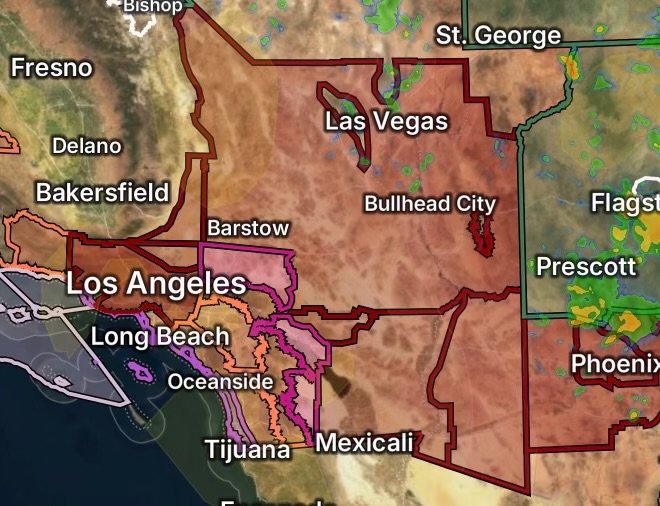
Extreme Heat Watch: Greater Mojave Desert Region
An Extreme Heat Watch remains in effect for:
- Northwest Arizona
- Southeast California
- Southern Nevada
- Greater Mojave Desert Region
Temperatures are expected to climb well above 110°F in many lower desert communities, with overnight temperatures remaining unusually warm. These warm nighttime temperatures greatly reduce the body’s ability to recover from daytime heat stress, increasing the risk of heat-related illnesses.
The hottest conditions are expected across the Mojave Desert where prolonged exposure outdoors could become dangerous within a short period.
Extreme Heat Warning: California Desert Communities
An Extreme Heat Warning is in effect for:
- Coachella Valley
- San Diego County Deserts
- San Gorgonio Pass near Banning
These locations could experience dangerous daytime temperatures between 110°F and 120°F, especially in lower elevations.
Heat impacts include:
- Heat exhaustion
- Heat stroke
- Increased wildfire danger
- Vehicle overheating
- Higher energy demand
- Elevated health risks for vulnerable populations
Residents should avoid strenuous outdoor activities during the afternoon, remain hydrated, and never leave children or pets inside parked vehicles.
Heat Advisory: Inland Empire
A Heat Advisory remains in effect across:
- San Bernardino County Valleys
- Riverside County Valleys
- Inland Empire
While temperatures may not be as extreme as nearby deserts, highs approaching or exceeding 100°F combined with elevated humidity can create dangerous conditions for outdoor workers, athletes, and anyone without access to air conditioning.
High Surf Advisory Along Southern California Beaches
A High Surf Advisory has been issued for:
- San Diego County Coastal Areas
- Orange County Coastal Areas
Large breaking waves and powerful rip currents are expected to create dangerous beach conditions.
Beach hazards include:
- Strong rip currents
- Sneaker waves
- Dangerous shore break
- Beach erosion
- Hazardous conditions for swimmers and surfers
Even experienced swimmers should use extreme caution, and beachgoers should stay near staffed lifeguard towers whenever possible.
Small Craft Advisory Across Southern California Coastal Waters
Hazardous marine conditions continue with a Small Craft Advisory affecting:
- Waters from Point Sal to Santa Cruz Island
- Waters extending 60 nautical miles offshore
- San Miguel Island
- Santa Rosa Island
- Outer waters from Santa Cruz Island to San Clemente Island
- Waters surrounding San Nicolas Island
- Waters surrounding Santa Barbara Island
Mariners should expect:
- Gusty winds
- Building seas
- Rough ocean conditions
- Reduced visibility in marine layer clouds
- Hazardous conditions for smaller vessels
Operators of smaller boats should consider delaying trips until conditions improve.
How Tropical Storm Elida and Hurricane Fausto Are Influencing Coastal Weather
Although Tropical Storm Elida and Hurricane Fausto remain over the eastern Pacific and away from the California coastline, both systems are influencing regional weather.
Increased Tropical Moisture
Moisture transported northward from Elida is raising humidity across California, Nevada, and portions of Arizona. This added moisture is creating muggy conditions, especially overnight, and may contribute to isolated thunderstorms over higher terrain while making the heat feel even more oppressive.
Larger Ocean Swells
While Fausto is forecast to remain well offshore, both tropical cyclones are helping generate longer-period swells that are contributing to elevated surf and dangerous rip current conditions along portions of Southern California’s coastline.
Marine Weather Changes
The interaction between tropical moisture, ocean temperatures, and regional weather patterns may also produce:
- Increased coastal humidity
- Morning low clouds and fog
- Rougher offshore seas
- Stronger localized winds
- Hazardous boating conditions
Heat Safety Tips
During dangerous heat events:
- Drink plenty of water throughout the day.
- Stay indoors during peak afternoon heat.
- Wear lightweight, light-colored clothing.
- Check on elderly neighbors and vulnerable family members.
- Never leave children or pets inside vehicles.
- Limit strenuous outdoor activities.
- Know the warning signs of heat exhaustion and heat stroke.
Beach and Marine Safety
If visiting Southern California beaches:
- Swim near lifeguards.
- Never underestimate rip currents.
- Stay out of the water if waves appear unusually powerful.
- Keep children close to shore.
- Boaters should monitor the latest marine forecasts before departing.
Final Outlook
Southern California, southeast California, northwest Arizona, and southern Nevada face a combination of dangerous heat, hazardous surf, and rough marine conditions over the coming days. While Tropical Storm Elida and Hurricane Fausto are expected to remain offshore, their influence is increasing humidity, enhancing ocean swells, and contributing to unusual coastal weather patterns. Residents and visitors should remain alert for rapidly changing conditions and heed all heat, surf, and marine advisories.
Radar Watch HQ Top 5 Essentials for Extreme Heat
Affiliate Disclosure: As an Amazon Associate, Radar Watch HQ earns from qualifying purchases.
When an Extreme Heat Watch or Heat Advisory is in effect, having the right gear can help you stay safer and more comfortable.
A compact, battery-powered fan provides cooling while traveling, working outdoors, waiting at events, or during power outages.
2. Insulated Water Bottle or Tumbler
A high-quality insulated bottle or cup keeps water cold for hours, making it easier to stay hydrated throughout the day.
A handheld misting fan or spray bottle delivers instant cooling by combining fine water mist with airflow.
Portable air conditioners, evaporative coolers (where appropriate), or high-performance tower fans can help reduce indoor temperatures during dangerous heat.
5. Electrolyte Hydration Packets or Drinks
Electrolyte supplements help replace minerals lost through heavy sweating and support hydration during prolonged heat exposure.