




Two Fires Burning Across Beaverhead County
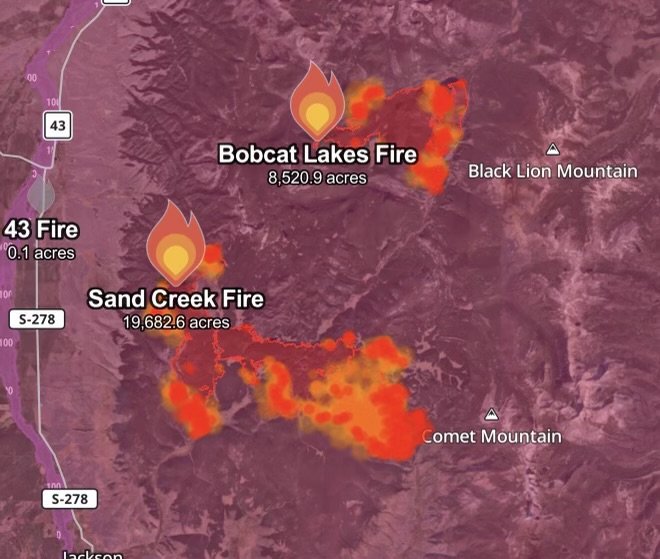
Beaverhead County, Montana, is facing an elevated wildfire threat as the Sand Creek Fire and Bobcat Lakes Fire remain active while critical fire-weather conditions affect the region.
The fires have already prompted evacuation actions in parts of the area, with Bobcat Lakes under a Level 3 “Go” evacuation designation. Officials have also ordered evacuations around areas threatened by the combined wildfire activity.
The situation is especially concerning because the fires are burning while a Red Flag Warning signals weather conditions capable of supporting rapid wildfire growth and extreme fire behavior.
Sand Creek Fire Continues to Grow
The Sand Creek Fire, located near the Wisdom and Maverick Mountain areas of Beaverhead County, has experienced significant growth in recent days.
Reports indicate the fire has reached the top of Maverick Mountain, while evacuations and closures remain in effect around threatened communities and recreational areas.
Hot, dry and unstable conditions have contributed to aggressive fire behavior. Fire officials are continuing efforts to protect homes, infrastructure and other key locations as the fire remains active.
Bobcat Lakes Fire Prompts Level 3 Evacuation
The Bobcat Lakes Fire is also burning in Beaverhead County near the Wisdom area.
The fire has grown substantially and has led to structure-protection efforts, closures and evacuation actions. Beaverhead County officials have issued Level 3 “Go” evacuations for areas threatened by the Bobcat Lakes and Sand Creek fires.
A Level 3 evacuation means residents in the affected area should leave immediately and not delay evacuation preparations.
Red Flag Warning Adds to the Danger
The combination of active wildfires and critical fire-weather conditions creates an especially dangerous situation.
Red Flag conditions can include:
- Strong or gusty winds
- Very dry vegetation
- Low humidity
- Rapidly drying fuels
- Increased potential for explosive fire growth
These conditions can allow flames to spread quickly and can make firefighting operations more difficult.
Beaverhead County’s wildfire planning documents also note that summer fuel moisture typically declines and that wildfire potential can reach peak levels during August.
Evacuations and Fire Safety Remain Critical
Anyone located within an active evacuation area should follow instructions from local authorities and leave when ordered.
Residents outside evacuation zones should remain alert because wildfire conditions can change rapidly. Keep vehicles fueled, gather important documents and medications, and have pets and essential supplies ready to go.
Do not wait until flames are visible before preparing to leave.
Smoke Could Affect the Region
Wildfires can also create hazardous smoke conditions far from the immediate fire perimeter. Winds can transport smoke into nearby communities, reducing visibility and affecting air quality.
People who notice worsening smoke should monitor local air-quality information and consider limiting strenuous outdoor activity when conditions deteriorate.
What to Watch Next
The biggest factors to monitor over the coming hours include wind speed and direction, humidity, fuel dryness, fire growth and evacuation changes.
With two active wildfires burning in Beaverhead County during a period of critical fire weather, conditions can change quickly.
Radar Watch HQ will continue monitoring the latest wildfire and weather developments across Montana. Stay alert, follow evacuation orders, and keep your emergency plan ready.
Stay Weather Aware 🔥
If you are in or near Beaverhead County, do not ignore evacuation warnings or official emergency notifications. When authorities issue a Level 3 “Go” order, leave immediately and use designated evacuation routes.
Follow Radar Watch HQ for continuing wildfire, severe weather and emergency updates.
Affiliate Disclosure: As an Amazon Associate, Radar Watch HQ earns from qualifying purchases.
Radar Watch HQ Top 5 Essential Emergency Preparedness Picks
Whether you’re preparing for severe thunderstorms, flash flooding, hurricanes, wildfires, or extended power outages, these five emergency essentials can help keep your household safer when severe weather strikes.
A portable power station provides reliable backup electricity during outages, allowing you to power phones, medical devices, laptops, lights, small appliances, and communication equipment without fuel.
Best for:
- Extended power outages
- Severe thunderstorms
- Hurricanes
- Winter storms
- Wildfires
2. Flood Protection Barriers & Sandless Flood Bags
Flood barriers help divert or absorb water before it enters garages, doorways, and low-lying areas. They deploy quickly and can help reduce property damage during flash flooding.
Best for:
- Flash Flood Warnings
- Heavy rainfall
- River flooding
- Coastal flooding
3. Rechargeable LED Flashlights
Bright, dependable flashlights are essential when the power goes out. Rechargeable or solar-powered models provide long-lasting illumination for navigating safely indoors and outdoors.
Best for:
- Overnight power outages
- Emergency evacuations
- Storm damage inspections
Keep phones, tablets, weather radios, and USB-powered devices charged when the electrical grid is unavailable. A solar power bank offers an additional charging option during prolonged emergencies.
Best for:
- Communication during outages
- Emergency weather alerts
- Travel and evacuation
A NOAA Weather Radio delivers official weather alerts directly from the National Weather Service, even when cellular networks or internet service are unavailable. It remains one of the most dependable ways to receive life-saving warnings.
Best for:
- Tornado warnings
- Severe thunderstorm warnings
- Flash flood warnings
- Hurricane alerts
- Winter storm emergencies
Why Radar Watch HQ Recommends These Essentials
At Radar Watch HQ, preparedness is just as important as staying informed. These five emergency essentials can help you stay connected, protect your property, and safely navigate severe weather events. Having supplies ready before storms arrive allows you to respond quickly when warnings are issued and conditions begin to deteriorate.