








Post-Tropical Cyclone Lala
Post-Tropical Cyclone Lala is winding down over the North Pacific after a long-lived tropical cyclone journey that included a significant impact on Hawaii earlier this month. As of August 28, Lala is no longer classified as a tropical cyclone, and the National Hurricane Center has issued its final advisory.
Lala Becomes Post-Tropical
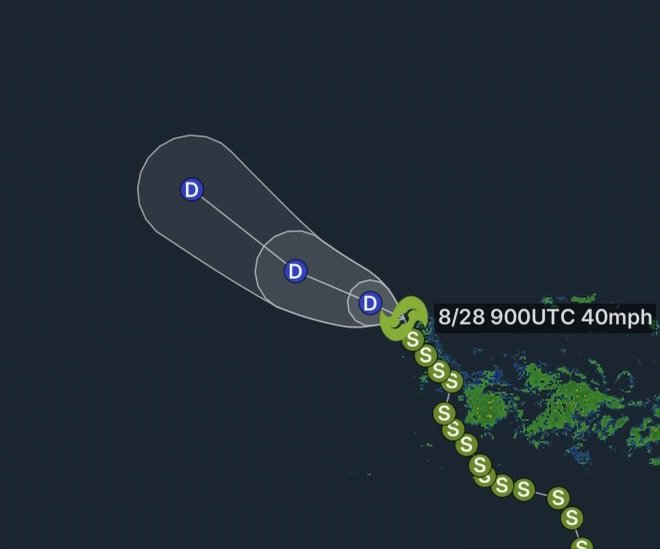
At 11 p.m. HST Thursday, August 27, Lala was located near 38.2°N, 179.4°W, approximately 680 miles north of Kure Atoll. The system had maximum sustained winds near 40 mph, with higher gusts, while moving north-northwest at about 6 mph.
Lala’s transition to a post-tropical cyclone occurred because its organized deep convection had become increasingly disorganized while the system moved over cooler waters. Forecasters expect the cyclone to continue weakening before dissipating.
A Long Pacific Journey
Lala was an unusually long-lived system, remaining a tropical cyclone for roughly 15 days and traveling more than 2,000 miles across the Pacific. Its evolution illustrates how tropical systems can survive and change character over large distances as they encounter different ocean temperatures, atmospheric winds and environmental conditions.
Hawaii Remembers Lala’s Impacts
Although Lala is now far from Hawaii, its earlier impacts remain significant.
Lala brought extremely heavy rainfall, flooding, strong winds and damaging conditions to parts of the Hawaiian Islands. The Big Island experienced some of the most serious impacts, including major flooding and landslide concerns.
Reports during the storm indicated rainfall totals approaching three feet in some locations, while flash flooding, mudslides, downed trees and power outages created dangerous conditions across Hawaii.
The storm also produced hurricane-force wind gusts even after weakening from hurricane strength, demonstrating that tropical cyclone impacts can remain dangerous even when a system is weakening.
Why Post-Tropical Does Not Mean Harmless
The term post-tropical cyclone does not automatically mean that all weather associated with a storm has disappeared.
Instead, it describes a system that no longer meets the meteorological requirements for classification as a tropical cyclone. Post-tropical systems can still contain strong winds, heavy precipitation or other hazardous weather, depending on their structure and environment.
In Lala’s case, however, the latest official advisory indicates no hazards affecting land, and the system is expected to dissipate within a couple of days.
What Happens Next?
Lala is forecast to gradually turn toward the west-northwest or northwest while continuing to weaken. The latest forecast calls for the remaining system to dissipate by approximately August 30.
The National Hurricane Center has ended its regular advisories on Lala. Future changes will therefore be handled through other weather forecasting products if the remnants produce weather of interest.
Pacific Hurricane Season Continues
Lala’s departure does not mean the Pacific hurricane season is over. Other tropical systems remain active across the Pacific, making continued monitoring important as the peak portion of the season approaches.
For Hawaii and other Pacific communities, Lala also serves as an important reminder that rainfall and flooding can become major hazards even when a storm does not make a direct landfall.
Radar Watch HQ Safety Reminder
Residents recovering from Lala should continue exercising caution around damaged roads, unstable slopes, flooded areas and downed power lines. Never drive through floodwater, and avoid entering areas where landslides or debris remain possible.
For those living in Hawaii or other Pacific islands, having emergency supplies, reliable weather alerts, backup lighting, drinking water and a way to receive information during power outages can make a major difference during future storms.
Radar Watch HQ Final Thoughts
Post-Tropical Cyclone Lala is finally winding down after an extraordinary Pacific journey. While Lala no longer poses a land threat according to the latest National Hurricane Center advisory, the storm’s impacts on Hawaii highlight how tropical cyclones can produce dangerous flooding, rainfall and wind well beyond the immediate center of circulation.
The Pacific remains active, so weather watchers should continue monitoring official forecasts as additional tropical systems develop.
Stay weather-aware, stay prepared and keep watching the skies with Radar Watch HQ.